Z-strain-1-Mush
PSP 10083
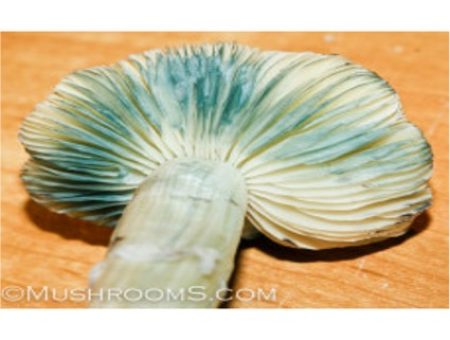
DNA Source: Mushrooms.com
General Information
- Accession Date
- June 13, 2021
- Report Type
- Whole-Genome Sequencing
- DNA Source Website
- mushrooms.com
This visualization shows how genetically distinctive this sample is compared to every other sample in this database. Distinctiveness is the average genetic distance from this sample to its five nearest samples: a sample with no close relatives in the collection scores high (rare), while one with several near-identical samples, for example repeated submissions of the same cultivar, scores low (common). The curve is the distribution of that score across the whole collection and the marker shows where this sample falls, so you can read, as a single percentile, how unique it is within this database rather than just how far it is from its nearest match.
More genetically distinct than 104 of 110 cultivars (95th percentile).
Assessing…
Clone Test
Is Z-strain-1-Mush a resequencing of a culture already in Psilocydia? Every assembled genome was aligned directly to its closest genome in the collection and the divergence measured. Pairs that are one culture sequenced twice sit at or below about 0.03%; genuinely different cultures sit well above it. Where Z-strain-1-Mush falls on that scale answers the question, calibrated against the collection's own resequencings rather than a rule of thumb.
Loading the clone test…
Genetic Information
Loading read coverage…
What is in the assembly
Loading the contigs…
Variants
Changes in the psilocybin genes were found by two independent analysis methods applied to this sample's sequencing reads: aligning the reads to the reference genome, and assembling the genome from them. Each change is labelled with the method that found it, or Both; hover a label for the read counts.
How we found these
- Both
- In the assembly and in the reads, so confirmed twice.
- Reads only
- In the reads, not in the assembly. The hover says why where we know: the assembly has the reference base there, does not cover the site, or this sample has no assembly. Many of these are changes carried by only part of the reads; an assembly keeps one base at each position.
- Assembly only
- In the assembly, but the reads show the reference base there, or too few reads cover the site to say.
Read counts. At every site we count the reads carrying each base (reads with mapping quality of at least 20, bases with quality of at least 13; 8 reads or more to say anything). The change is in most reads at 80% or more, mixed between 20% and 80%, in a minority from 5% to 20% (and at least 2 reads), and essentially absent below that. These counts say what the reads show; they say nothing about how many copies of the gene the sample carries. A change counts as found in the reads when these counts show it (in most, mixed or a minority of reads) or when the lab's variant report lists it. That report lists only changes its gene models rate HIGH or MODERATE, so many changes the reads show are not on it.
Names. Protein changes are named on our curated gene models for the psilocybin cluster. The read-alignment report names them on the public reference's gene models, which in places differ (for example, the public models join psiT1 and psiK into one gene); where the names differ, the hover shows both.
What is listed. Changes that alter the protein (rated HIGH or MODERATE), and every change on the lab's variant report for the cluster. Positions are on chromosome 10 of the reference genome.
Genetic Relatives
Nearest
- MGC_2016_unknown_strain (PSP10012) — 0.314
- Orissa-India-4-Mush (PSP10073) — 0.316
- Chitwan-1-SW (PSP10002) — 0.323
- Luminous-lucies-2-PS (PSP10032) — 0.331
- Luminous-lucies-3-PS (PSP10033) — 0.331
- Arenal-Volcano-1-Mush (PSP10059) — 0.331
- Luminous-lucies-1-PS (PSP10034) — 0.331
- Bplus-ITW-WM (PSP10129) — 0.332
- Orissa-India-1-Mush (PSP10072) — 0.333
- Penvy-2-SW (PSP10075) — 0.333
- Penvy-1-PS (PSP10045) — 0.334
- Penvy-Col4-PS (PSP10043) — 0.334
- Penvy-Col5-PS (PSP10044) — 0.334
- Roatan-Honduras-4-Mush (PSP10079) — 0.342
- Treasure-Coast-2-Mush (PSP10082) — 0.343
- Treasure-coast-3-PS (PSP10056) — 0.344
- Tosohatchee-print-ITW (PSP10081) — 0.344
- Treasure-coast-1-PS (PSP10054) — 0.345
- Treasure-coast-2-PS (PSP10055) — 0.345
- ColumbiaRust-1-SW (PSP10021) — 0.347
Most Distant
- Bplus-3-PS (PSP10001) — 0.585
- GoldenCoast-BAF-A1-UM (PSP10105) — 0.580
- GoldenCoast-BAF-A2-UM (PSP10106) — 0.579
- Orissa-India-ITW (PSP10071) — 0.579
- True-Albino-Teacher-ITW-WM (PSP10140) — 0.577
- GoldenCoast-BAF-B1-UM (PSP10107) — 0.577
- GoldenCoast-BAF-B2-UM (PSP10108) — 0.576
- McKennaii-1-PS (PSP10069) — 0.575
- Bplus-3-redo-SW (PSP10016) — 0.574
- Bplus (PSP10088) — 0.574
- Bplus-1-redo-SW (PSP10014) — 0.574
- Ecuador-3-SW (PSP10025) — 0.574
- Bplus-2-redo-SW (PSP10015) — 0.574
- Gulf-Coast-BAF (PSP10090) — 0.573
- Avery-Albino-ITW-WM (PSP10123) — 0.573
- GoldenTeacher-3-SW (PSP10029) — 0.573
- HUA-Early (PSP10092) — 0.573
- GoldenTeacher-2-SW (PSP10028) — 0.572
- Burma-1-SW (PSP10020) — 0.572
- Gulf-Coast (PSP10091) — 0.572
Sequence Data Downloads
The blockchain-registered VCF above can be downloaded by anyone, so its hash can be checked independently against the blockchain record. The remaining sequence data files — FASTQ, BAM and assemblies — are available to authorised accounts. Log in to download, or contact us for access.
Psilocybin
The psilocybin biosynthesis genes sit together in one cluster on chromosome 10 (psiD, psiK, psiM, psiH, psiR, psiT1, psiT2). Every assembled genome in Psilocydia was compared with the MGC_Penvy_1 reference across this window; below are the variants Z-strain-1-Mush carries there, and which other samples carry the same ones. This section compares assemblies only; the psilocybin gene cards under Variants combine the assembly with the reads, so they can list changes that are not here.
Loading the cluster variants…
The enzymes in 3D
This sample's version of each enzyme next to the P. Envy reference's. Flip between the two models; the track underneath shows every change seen in the collection and how many samples carry it, with this sample's changes filled in.
Loading the enzymes…
Blockchain Registration Information
- Transaction ID
-
8933525c93705a92
46921d7b6dca6932 9067819ff949808d 73f3444ef006fe23 - Stamping Certificate
- Download PDF (39.7 KB)
- SHASUM Hash
-
c8ed925c8ebabc6d43482792d517f3ab 4b43d07b9b4f651b 307d4e09c421ed08